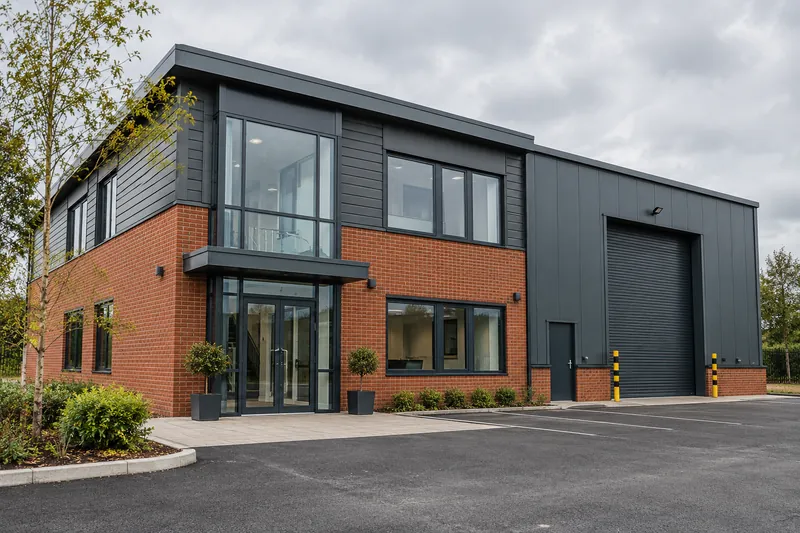
A commercial property loan funds business or investment premises; a commercial mortgage is a common long-term loan secured on the property. The right structure depends on who occupies the building, how repayments will be funded and the deposit available. The property can be repossessed if secured borrowing is not repaid.
Published by Business Loan Options. Sources checked 4 October 2026.
Section 01
What is a commercial property loan?
Commercial property finance covers borrowing for premises used in business or held as an investment. A commercial mortgage is one structure. Short-term bridging or development finance has a different purpose and repayment plan, so the words property loan do not identify one interchangeable product.
Start by distinguishing a building your business will occupy from one rented to tenants. Then establish whether the property is ready for its proposed use and whether a long-term mortgage is the right route.
Section 02
Owner-occupied versus investment
For owner-occupied premises, the lender focuses on the trading business: accounts, management performance, forecasts, sector risk and the ability to make repayments after normal operating costs. Owning can give control over layout and occupation while replacing rent with debt service and capital investment.
For an investment property, lease terms, tenant quality, rent cover, vacancy, property condition and local demand carry more weight. A property company may still need to support shortfalls, capital works and periods without rent.

Section 03
Deposit, value and loan-to-value
The lender advances a percentage of its accepted property value, leaving the borrower to provide the balance and transaction costs. The price paid and the lender’s valuation are not always the same. If valuation comes in low, the company may need more cash or a smaller facility.
Loan-to-value is only one test. Debt-service cover examines whether cash generation supports payments. A strong property cannot compensate indefinitely for a business that cannot service the loan, particularly if sale would be slow or specialised use limits demand.
Section 04
Budget beyond the interest rate
Property borrowing brings costs before, during and after completion. Cash required on day one can materially exceed the deposit, so obtain estimates early and keep a contingency for survey findings or lender conditions.
- Lender and independent valuation fees.
- The borrower’s and lender’s legal costs.
- Arrangement, commitment and broker fees.
- Building survey, environmental review and insurance.
- Stamp Duty Land Tax, Land Transaction Tax or Land and Buildings Transaction Tax.
- Fit-out, repairs, business rates, utilities and ongoing maintenance.
- Early-repayment charges and fixed-rate break costs.

Section 05
Rate, term and refinance risk
The payment can be fixed for a period or move with a reference rate. Some loans have a shorter facility term than the capital repayment profile, leaving a residual balance to refinance at maturity. A 20-year amortisation does not necessarily mean the lender commits for 20 years.
Model a higher rate, a lower valuation and a delayed refinance. For investment property, add vacancy and rent-reduction cases. For owner occupation, compare payments with an earnings downturn and the cash required to maintain the building.
Section 06
Security and covenants
The lender takes a legal charge over the property and may take a debenture over company assets or personal guarantees from directors. Covenants can cover loan-to-value, debt-service cover, information delivery, insurance, occupation, leases and further borrowing.
A breach can give the lender rights even before a payment is missed. Understand cure periods, valuation rights and the consequences of changing tenants, use or ownership. Limited-company and LLP charges generally need registration at Companies House within the statutory 21-day period.
Section 07
When buying is not the best answer
Ownership ties up cash and reduces flexibility. Leasing can be better where headcount or location needs are uncertain, where the property is highly specialised or where the company can earn a stronger return by investing its deposit in operations.
Compare the full occupancy cost under both routes over a sensible period. Include rent reviews and dilapidations for a lease, and financing, tax, maintenance and resale uncertainty for a purchase. Property appreciation should be an upside case, not the only reason the operating company can afford the loan.
Section 08
How do you get a commercial property loan?
Prepare the property details, available deposit and evidence showing how the business or rental income supports repayments. Approach a lender or broker, compare the proposed structure, then satisfy underwriting, valuation and legal conditions.
Use the linked application guide to assemble the documents and identify which costs must be funded before completion. A preliminary conversation or indicative quote is not a guarantee that the loan will complete.
Common questions
Is a commercial property loan the same as a commercial mortgage?
Commercial property loan is a broad description. A commercial mortgage is normally long-term borrowing secured on commercial premises. Bridging and development finance can also be property loans but serve different purposes.
What rate will I pay on a commercial property loan?
The rate depends on the lender's assessment and proposed structure. Compare a case-specific quote, including fees, rather than treating a benchmark or advertised minimum as your available rate.
How much deposit do I need?
The lender's accepted valuation and LTV policy determine the security-based borrowing ceiling. You must fund the price gap and transaction costs; affordability can restrict borrowing further.
Sources
Primary sources and further reading
Facts and status were checked against the following sources on 4 October 2026. External pages can change. Worked examples use the assumptions stated alongside them.
- 1.British Business Bank — financing commercial property
- 2.GOV.UK — non-residential SDLT rates
- 3.Welsh Government — Land Transaction Tax
- 4.Revenue Scotland — LBTT
- 5.Companies House — register a company charge
- 6.NatWest — commercial mortgages and deposit guidance
- 7.NatWest — commercial mortgage rates
- 8.NatWest — applying for a commercial mortgage
- 9.Bank of England — current Bank Rate